
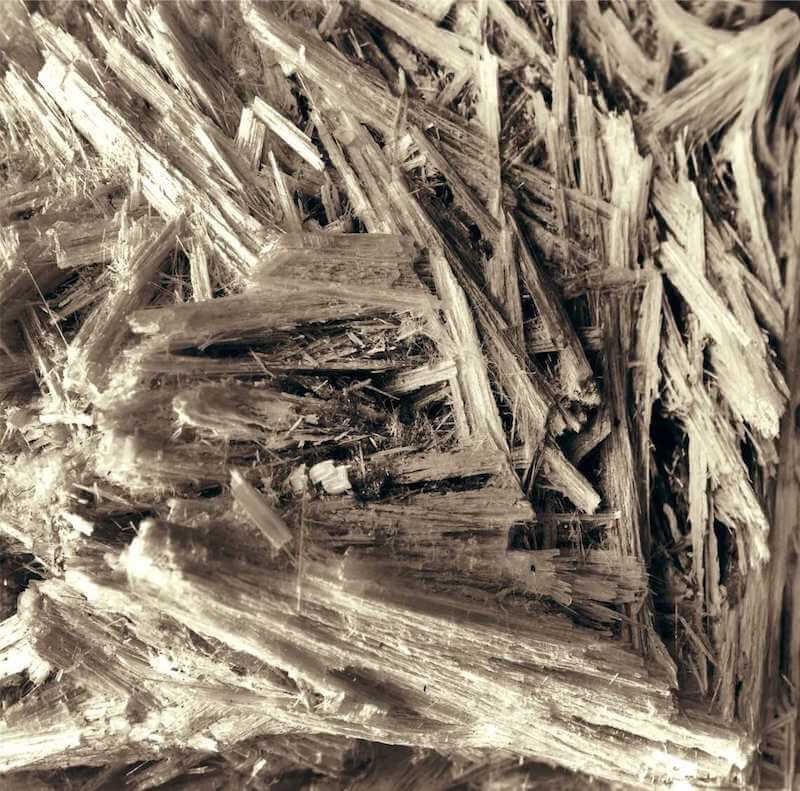
What Is Asbestos And How Does It Affect Me?
What is asbestos?
Asbestos is a widely used term for a set of naturally occurring minerals which were widely used in the United Kingdom between 1950 and 1980. It was prized and utilised for its strength and flexibility but more so for its fire resistance.
What does it look like?
Asbestos as a naturally occurring mineral fibre comes in many different colours but there are three main types of asbestos.
Chrysotile – Chrysotile or as it’s more commonly known as white asbestos, was used in cement and roofing materials due to its heat resistance. This is the most common form of asbestos.

Amosite – Amosite or brown asbestos as its commonly known is the second type of mineral asbestos that is predominately mined in Africa. It’s properties include heat resistance and flexibility and it was widely used in electrical and plumbing insulation, and cement sheets.

Crocidolite – crocidolite or blue asbestos is the most dangerous form of asbestos due to its brittleness. Once again, this type of asbestos was used because of its heat resistance and good sound insulation properties.

Why is asbestos dangerous?
Asbestos is very dangerous if disturbed and if asbestos fibres are inhaled into the lungs they can lead to 4 main types of diseases.
- Mesothelioma
- Asbestos-related lung cancer
- Asbestosis
- Pleural thickening
In the past (before the dangers of asbestos were discovered) it was treated as a wonder mineral which had amazing properties. It was only as time went by and those exposed to asbestos became very ill and thousands died. Today its estimated that 5000 people die annually from asbestos-related illnesses.
It has to be said that studies show that long term exposure to asbestos can cause serious illnesses nevertheless in damage restoration and recovery we treat it as a priority.
Where in my house could there be asbestos?
Asbestos was widely used in both domestic and commercial properties. In domestic properties asbestos can be found in the following areas:
- textured ceiling and wall coatings such as artex
- thermoplastic or vinyl floor tiles
- lagging on boilers or pipes
- asbestos cement used in roofing
- insulation boards used in and around boilers

There is asbestos in my house. Does it pose a risk to me or my family?
We have to mention now that asbestos containing materials (ACM’s) only pose a risk if the material has been disturbed or broken. Examples of disturbed asbestos containing materials could be:
- a collapsed plasterboard ceiling which had artex on it
- broken thermoplastic or vinyl tiles underneath the carpet
- worn lagging on very old pipes or boilers
If the ACM is in good condition then it will not pose a risk to health.
I think I may have asbestos in my house, what should I do?
If you believe that you have asbestos in your house and it has been disturbed you should call in a professional asbestos surveyor and have the materials tested. It is best if you can close off the area where the potential ACM’s are and that would save any cross contamination.
Summary
Asbestos is a very dangerous mineral fibre and must be managed carefully. It has caused the deaths of millions of people and caused life changing illnesses to many others.
However, at this point we must stress that although there is the potential for the presence of asbestos in millions of homes, it only becomes an issue if the material which may contain asbestos becomes breached or disturbed.
Millions of people live with asbestos in their homes without any issues but nevertheless its important to be vigilant. If you are concerned about asbestos or would like further information about it please contact Rainbow International on 01274 588011